
I remember the first time someone casually joked about my snoring. It wasn’t loud enough to wake the neighbors, but it was consistent, every night, without fail. At first, I brushed it off. “Everyone snores sometimes,” right? But as time went on, I started to wonder whether those quiet jokes pointed to something more profound. The snoring causes you shouldn’t ignore aren’t always obvious, and sometimes your body speaks up in ways we’re used to dismissing.
The truth is, snoring isn’t always harmless background noise. When it happens regularly, it can be a sign that something in your body isn’t working as smoothly as it should while you sleep. Many people assume snoring is just a sleep habit or a mild inconvenience, but in reality, it can be connected to underlying health issues that affect how well your body rests, recovers, and functions during the day.
In this article, we’ll break down 11 health conditions that can cause snoring, explain why each one deserves attention, and help you understand when snoring should be taken seriously instead of brushed aside.
How Health Conditions Lead to Snoring
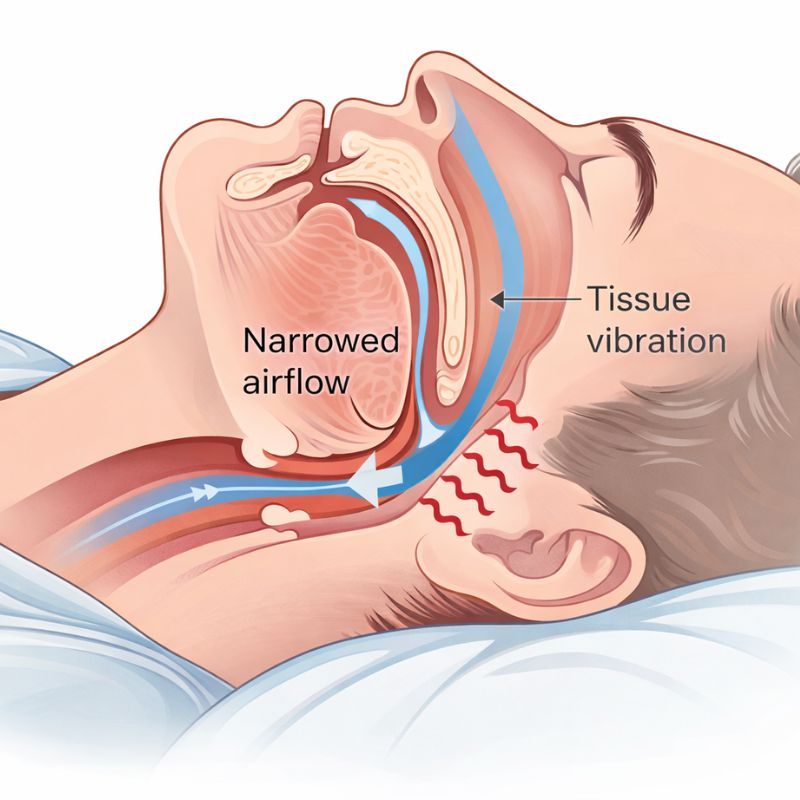
Snoring happens when airflow becomes partially blocked as you breathe during sleep. When air struggles to move freely through the upper airway, the surrounding tissues vibrate, producing the familiar snoring sound.
Many health conditions contribute to this blockage by causing:
- Tissue swelling
- Structural narrowing of the airway
- Loss of muscle tone during sleep
- Impaired neurological control of breathing
That’s why snoring is rarely the root problem. More often, it’s a symptom, and understanding the cause is the key to protecting your long-term health.
11 Health Conditions That Can Cause Snoring (And Why They Matter)
1. Obstructive Sleep Apnea (OSA)

A severe sleep disorder in which the airway repeatedly collapses during sleep, temporarily stopping breathing.
Why it causes snoring:
Airway obstruction leads to loud, chronic snoring interrupted by pauses, gasping, or choking sounds.
Why it matters:
Untreated OSA is strongly linked to high blood pressure, heart disease, stroke, type 2 diabetes, and cognitive decline. According to research, moderate to severe sleep apnea can increase cardiovascular risk.
Key warning signs:
Loud snoring, excessive daytime sleepiness, morning headaches, and poor concentration.
For people diagnosed with sleep apnea or other sleep disorders, exploring newer treatment options may improve outcomes. You can learn more about emerging therapies for sleep disorders and how they support better breathing during sleep.
2. Chronic Nasal Congestion (Allergic Rhinitis or Chronic Sinusitis)
Persistent inflammation of the nasal passages caused by allergies, infections, or environmental irritants.
Why it causes snoring:
Blocked nasal airflow forces mouth breathing, increasing throat vibration during sleep.
Why it matters:
Chronic inflammation doesn’t just disrupt sleep; it plays a central role in the mechanisms underlying sleep-disordered breathing, contributing to abnormal respiratory patterns and, in more severe cases, episodes of oxygen desaturation.
Addressing the root cause of allergies, which triggers nasal congestion, can help reduce nighttime breathing resistance. These natural remedies for seasonal allergies may help clear airways and promote more restful sleep.

3. Deviated Nasal Septum
A structural misalignment of the nasal septum that reduces airflow through one or both nostrils.
Why it causes snoring:
Restricted airflow increases resistance, turbulence, and vibration during breathing.
Why it matters: A deviated septum often leads to chronic congestion, frequent sinus infections, poor sleep quality, and persistent fatigue.
4. Obesity-Related Airway Compression
Excess fat deposits around the neck and upper airway.
Why it causes snoring:
Added tissue narrows the airway and increases collapse during sleep.
Why it matters: Obesity is one of the strongest risk factors for sleep apnea and metabolic syndrome. Research shows that even a 10% weight gain can increase sleep apnea severity by up to 32%.
If you’re struggling to lose weight, you might be falling in one of these 11 habits keeping you in a weight plateau.
5. Enlarged Tonsils or Adenoids
Overgrowth of lymphoid tissue, common in children but also present in adults.
Why it causes snoring:
Physically blocks airflow through the throat.
Why it matters: In children, untreated airway obstruction can impair growth, learning, behavior, and attention, while in adults, it can cause fragmented sleep and oxygen deprivation.
6. Hypothyroidism

An underactive thyroid gland that slows metabolic processes.
Why it causes snoring:
Hypothyroidism can cause tissue swelling and reduced muscle tone in the airway, increasing collapse during sleep.
Because thyroid health plays a vital role in metabolism and airway muscle tone, nutrition can also be part of long-term support. These foods to support a healthy thyroid may help complement medical care.
Why it matters:
Beyond snoring, untreated hypothyroidism affects heart health, metabolism, mood, and cognitive function.
7. Gastroesophageal Reflux Disease (GERD)
Chronic acid reflux that reaches the throat and airway.
Why it causes snoring:
Acid irritation inflames airway tissues, narrowing airflow.
Why it matters:
GERD is associated with worsened sleep apnea, chronic throat irritation, and disrupted sleep cycles, which can amplify fatigue and daytime symptoms.
Managing reflux symptoms is essential for reducing airway irritation at night. These home remedies for acid reflux can help soothe throat tissues and support more comfortable sleep.
8. Hormonal Changes (Pregnancy or Menopause)
Hormonal fluctuations that affect fluid retention and muscle tone.
Why it causes snoring:
Increased nasal swelling and relaxation of airway muscles.
Why it matters: Snoring during pregnancy has been linked to gestational hypertension and sleep apnea, while post-menopausal women face a rising risk of sleep-disordered breathing.
9. Chronic Alcohol Use or Sedative Dependence
Regular consumption of substances that depress the central nervous system.
Why it causes snoring:
Alcohol and sedatives excessively relax throat muscles, increasing airway collapse.
Why it matters: Alcohol before sleep can worsen oxygen deprivation and dramatically increase sleep apnea severity, even in people without a prior diagnosis.
10. Neurological Disorders Affecting Breathing Control
Conditions that impair the brain’s regulation of airway muscles.
Why it causes snoring:
Poor coordination of breathing and muscle tone during sleep.
Why it matters: Snoring may signal central sleep apnea or neurological dysfunction, requiring specialized evaluation and treatment.
11. Chronic Upper Airway Inflammation or Infection
Persistent irritation from smoking, pollution, infections, or environmental exposure.
Why it causes snoring:
Swollen tissues reduce airway diameter.
Why it matters:
Long-term inflammation increases the risk of sleep apnea, chronic respiratory disease, and reduced sleep quality.
Because chronic inflammation plays a role in airway narrowing, supporting the body’s inflammatory response may be beneficial. These ways to reduce inflammation naturally can complement medical guidance and long-term airway health.
Symptoms That Suggest Snoring Is a Health Warning Sign

- Loud, habitual snoring
- Pauses in breathing during sleep
- Morning headaches
- Excessive daytime sleepiness
- High blood pressure or heart issues
- Poor memory or concentration
If these sound familiar, your snoring deserves attention.
When Snoring Requires Medical Attention
Occasional snoring happens. Chronic, worsening, or disruptive snoring does not.
You should seek professional evaluation if snoring:
- Occurs most nights
- Is accompanied by fatigue or breathing pauses
- Affects daily performance or mood
- Coexists with cardiovascular or metabolic conditions
Before you visit the doctor, I’ve recently published a complete guide on 15 methods to relieve snoring. So you can try them out at home, and assess whether or not your case is mild or chronic.
My Final Thoughts: Snoring Causes You Shouldn’t Ignore and the Signals Your Body Sends
Snoring isn’t always harmless; sometimes, it’s your body’s way of asking for help. Learning to recognize snoring causes you shouldn’t ignore allows you to understand what may be happening beneath the surface and gives you the power to protect your sleep, your health, and your future.
So instead of brushing it off, maybe the better question is: what might your snoring be trying to tell you?

Hi I’m Ana. I’m all about trying to live the best life you can. This blog is all about working to become physically healthy, mentally healthy and financially free! There lots of DIY tips, personal finance tips and just general tips on how to live the best life.
Leave a Reply