
You’re at a birthday party surrounded by laughter and the smell of fresh cake. The dessert table is filled with scoops of vanilla and chocolate topped with fudge, and someone hands you a bowl. You hesitate for a second, wondering: can people with diabetes eat ice cream without worrying about what comes next?

That question isn’t just about sugar. It’s about freedom, comfort, and how to enjoy life’s small pleasures without losing control of your blood sugar.
For many people living with diabetes, dessert isn’t simply food; it’s an emotional decision tied to balance, trust, and the fear of undoing progress.
The truth is, you can enjoy ice cream, but it takes strategy and awareness. The short answer is yes. The long answer? It depends on how you do it.
Let’s look at the science behind it, the personal factors to consider, and seven innovative ways to make that occasional scoop completely guilt-free.
You may also like: Recognizing the Early Signs of Diabetes – A Practical Guide.
What Really Happens When You Eat Ice Cream?

Ice cream is a perfect mix of carbohydrates, fat, and protein, three macronutrients that affect blood sugar differently.
When you eat it:
- Carbohydrates (mainly sugar and lactose) break down quickly into glucose, which raises blood sugar levels.
- Fat slows digestion, so the spike can happen later than expected.
- Protein adds balance, but not enough to offset the effects of sugar in large servings.
For someone with diabetes, these mixed effects can be tricky. Flavors with cookies or candy can double that.
- If you have type 1 diabetes, timing your insulin correctly is more crucial than ever, as fat slows down the glucose spike.
- For type 2, insulin resistance makes it more challenging to process the same amount of sugar.
- For people with pre-diabetes, the goal is to minimize spikes to protect long-term pancreatic health.
Ice cream’s carbohydrates can raise blood sugar quickly, especially when eaten alone.
If you’re looking to balance your glucose naturally, you can explore these Foods To Lower Blood Sugar to support better control in your daily meals.
Factors to Consider Before Saying Yes to Ice Cream

- Current blood-sugar stability. If you’re already trending high, even a small serving can push you into unsafe territory.
- A1C levels. Consistently elevated readings may indicate that your diet needs to be tightened first.
- Medication or insulin regimen. Some medications (like GLP-1 agonists or SGLT2 inhibitors) affect digestion speed or insulin response.
- Cardiovascular risk. Because ice cream is high in saturated fat, individuals with cholesterol or heart issues should be mindful of portion sizes.
- Timing of the treat. Having it right after a meal rather than on an empty stomach blunts the spike.
- Physical activity. A short post-dessert walk can reduce glucose spikes, according to some medics.
- Emotional mindset. Food guilt raises cortisol, another hormone that can increase blood sugar levels. Enjoyment and mindfulness actually help balance it.
Emotional eating and sugar cravings can make dessert decisions harder.
If you often struggle with sudden urges for sweets, these strategies to control sugar cravings can help you reduce cravings without feeling deprived.
Choosing Smarter Flavors and Formulas
All ice creams aren’t created equal. Here’s what to look for on the label:
- “No added sugar” or “light” doesn’t mean carb-free; check total carbohydrates, not just sugars. Many use sugar alcohols like erythritol or maltitol, which can still raise glucose in sensitive people.
Not all natural sweeteners are equal; some can still impact glucose levels.
- Plain flavors beat mix-ins. A simple vanilla has 16-19 g carbs per ½ cup; cookie-filled versions can exceed that.
- Low-fat or high-protein frozen yogurts may sound healthier, but they can contain just as much sugar. Compare both macros.
- Plant-based options (like almond-milk or coconut-milk ice creams) can work if they’re low-sugar and fortified—but watch saturated fat.
- Homemade blends with frozen bananas, Greek yogurt, and a splash of vanilla can provide a creamy texture with fewer carbs and more protein.

7 Smart Strategies to Enjoy Ice Cream Safely
Yes, people with diabetes can eat ice cream and still enjoy it guilt-free. You need a plan, a spoon, and these seven tricks to keep your blood sugar happy.
1. Plan It — Don’t Wing It
Cravings love chaos. Structure beats guilt.
- Set your limit first: If your daily goal is around 45 g of carbs per meal, save 15–20 g for dessert (about one small scoop).
- Think ahead: If you know a celebration is coming, adjust earlier meals to make room for your treat.
- Why it works: Planning reduces impulsive eating, which research shows can raise both blood sugar and stress hormones.
2. Pair It with Protein or Fiber
Balance every sweet with something that stabilizes you.
- Add a handful of nuts, a sprinkle of chia seeds, or a Greek yogurt base.
- Top with unsweetened fruit, such as berries, instead of syrup.
- Protein and fiber slow digestion and reduce post-meal glucose spikes by up to 25 %, according to the ADA.
3. Practice Portion Precision
One scoop is more than enough if you serve it right.
- Use a ½-cup measuring scoop once to visualize a real portion.
- Choose small dessert bowls to trick your eyes (and appetite).
- Consistency helps your body adapt and improves insulin efficiency over time.
4. Monitor and Learn from Your Numbers
Your data tells the truth; use it.
- Suppose you have a CGM, check readings one and two hours after dessert.
- If not, use a simple glucometer and note the flavor, portion, and activity that day.
- You’ll discover your personal “safe zone” for sweets and learn which brands cause fewer spikes.
5. Move After You Munch
No guilt, just gentle movement.
- Take a 10–15-minute walk after dessert.
Even a short stroll can make a noticeable difference in how your body handles glucose. Learn more about The Incredible Health Benefits of Walking and how this simple habit can transform your overall health.
- Light chores, stretching, or dancing also help.
- Why it works: Muscles use glucose for energy, naturally lowering blood sugar without extra medication.

6. Time It Smartly
Timing can make or break your numbers.
- Eat ice cream after a balanced meal, never on an empty stomach.
- Include protein and fiber sources (such as chicken and vegetables) first.
- Why it works: Nutrients cushion sugar absorption, keeping your glucose curve smoother and steadier.
7. Savor Every Bite — Don’t Rush
The sweetest secret: slow down.
- Take small spoonfuls, let them melt, and notice texture and flavor.
- Enjoy it mindfully, ideally during a calm moment, rather than while multitasking or scrolling through your phone.
- Mindful eating triggers fullness hormones like GLP-1, which signal satisfaction and support better glucose control.
Combine these strategies: plan, pair, portion, and pace, and you’ll enjoy dessert without the spike or the stress.
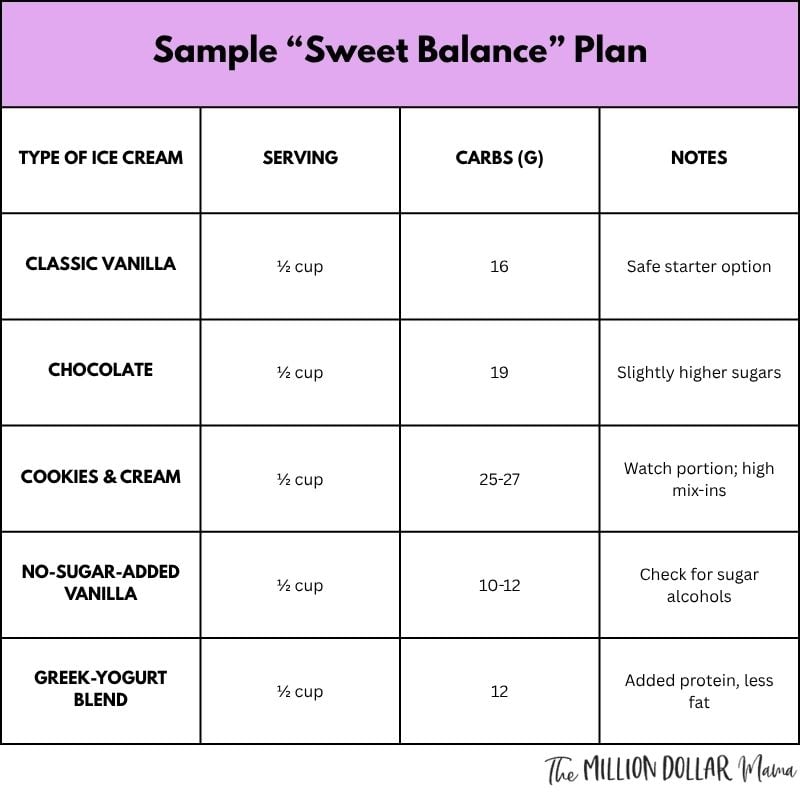
The TMDM “Sweet Balance” Plan
To help you understand how certain type of ice creams are created, the following chart can help you enjoy ice cream safely if you suffer from diabetes.
When Ice Cream May Not Be Worth It
Even small indulgences can backfire in certain situations:
- A1C above 8 % or frequent glucose spikes > 250 mg/dL.
- Recent medication changes without knowing your body’s new response.
- Active complications such as diabetic neuropathy or nephropathy.
- High triglycerides or LDL. The saturated fat in premium ice creams can worsen lipid profiles.
In times when your glucose levels are unstable, it may be safer to avoid desserts altogether.

Special Situations
Type 1 Diabetes
Coordinate bolus insulin timing with the delayed fat absorption. Many find dual-wave or square-wave boluses effective when using insulin pumps.
Type 2 Diabetes
Pair your treat with physical activity and fiber-rich meals to boost insulin sensitivity.
Gestational Diabetes
Consult your obstetrician or dietitian before any dessert. The hormonal shifts during pregnancy can amplify glucose variability.
Low-Carb or Keto Plans
“Ketogenic ice creams” often use sugar alcohols and fat-based sweeteners. Some are fine occasionally, but be mindful of tolerance; too much can cause bloating or diarrhea.
Can People With Diabetes Eat Ice Cream and Stay in Control? – My Final Thoughts
Yes, people with diabetes can eat ice cream, but only when it’s done intentionally, informed, and in moderation. The magic lies in understanding your body, reading labels, and making those small strategic moves that keep blood sugar steady.
Here’s your quick checklist before that next scoop:
- Is glucose stable today?
- Eating it after a meal, not alone?
- Portion measured?
- Low-sugar flavor?
- Movement planned after?
If you can check those boxes, you can absolutely enjoy your dessert without fear.
Because managing diabetes isn’t about never having sweets, it’s about learning how to fit joy into control.
So, tell me, when was the last time you savored ice cream without a hint of guilt?

Hi I’m Ana. I’m all about trying to live the best life you can. This blog is all about working to become physically healthy, mentally healthy and financially free! There lots of DIY tips, personal finance tips and just general tips on how to live the best life.
Leave a Reply