
Have you ever stood in the kitchen holding a protein shake and wondered how much protein you should take? With so many conflicting recommendations online, finding a number that fits your body can feel far more complicated than it should.
The truth is that someone trying to build muscle won’t necessarily need the same amount as someone losing weight, recovering postpartum, or spending most of the day sitting. Your routine and personal goal make a real difference.
This guide will help you find a practical daily range in grams per pound, without turning every meal into a stressful calculation.
If choosing what to eat feels harder than calculating your target, these high-protein, filling foods can make everyday meals much easier.
A Quick Note Before We Get Started:
The information below is meant to guide you, but everybody has different needs. Please talk with a registered dietitian before changing your protein intake, especially if you’re postpartum, managing a health condition, or considering supplements.
How to Calculate Your Daily Protein Target
Use this simple formula:
Body weight in pounds × protein target = grams of protein per day
For example, a 150-pound person using 0.55 grams per pound would aim for about 83 grams daily.
The adult Recommended Dietary Allowance (RDA) is 0.36 grams per pound. This covers basic nutritional requirements; it isn’t automatically the best target for every fitness goal.
If your current weight is far above or below your intended weight, ask a dietitian whether to calculate from your current, goal, or adjusted weight.
Protein Goals at a Glance
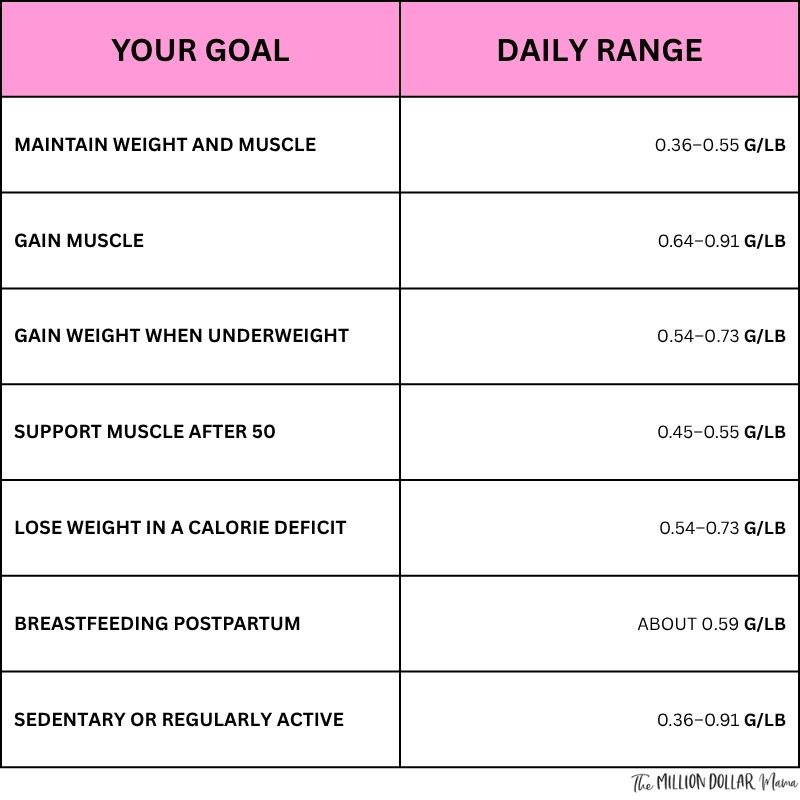
These ranges overlap because your goals can overlap. A 52-year-old woman lifting weights, for example, may belong in both the age and active categories.
How Much Protein Should You Take for Different Goals?
Ok, now let’s take a closer look to each scenario.
1. Maintain a Healthy Weight and Your Current Muscle
Daily target: 0.36–0.55 grams per pound
The lower end may suit a healthy adult with little activity. If you exercise several times a week, moving toward 0.45–0.55 grams can provide a more comfortable margin for maintaining muscle. Research reviews suggest that 1.2–1.6 g/kg may better support active adults and healthy aging than the minimum RDA.
- Simple rhythm: Include protein at breakfast, lunch, and dinner.
- Easy choices: Try eggs, Greek yogurt, fish, or these plant-based protein foods for meat-free options.
2. Gain Muscle With Strength Training
Daily target: 0.64–0.91 grams per pound
Protein supplies the building blocks, but resistance training provides the reason for your muscles to grow. Research recommends 1.4–2.0 g/kg (0.64–0.91 g/lb) for most exercising adults. A meta-analysis found that gains generally leveled off at around 1.6 g/kg (0.73 g/lb) during resistance training.
- Practical middle: Start near 0.73 g/lb rather than assuming more is better.
- Training partner: Pair your intake with progressive strength work and enough total calories.
- Meal inspiration: These high-protein, low-calorie foods can support lean muscle without making meals overly heavy.
Million Dollar Mamas have also enjoyed: A Beginner’s Guide to Weight Training.

3. Gain Weight When You’re Very Thin
Working range: 0.54–0.73 grams per pound
There isn’t a special protein RDA simply for being thin. This range is a practical starting point when the plan includes strength training, but weight gain also requires sufficient total food intake. A healthier approach is to choose nutrient-rich meals and calorie-dense additions rather than relying on low-nutrient treats or expensive weight-gain products.
- Build it up: Add nut butter, avocado, olive oil, cheese, milk, or seeds.
- Please check in: Unexplained weight loss, poor appetite, or trouble gaining weight deserve medical guidance.
You may also want to read: 7 Natural and Safe Ways to Gain Weight for Skinny People.
4. Protect Muscle After Age 50
Daily target: 0.45–0.55 grams per pound
Research suggests 1.0–1.2 g/kg for adults over 50, rising toward 1.5 g/kg with heavier training. For a 150-pound adult, the basic range is roughly 68–82 grams per day.
- Daily pattern: Spread protein across meals instead of crowding it into dinner.
- Best pairing: Combine your protein target with these practical ways to prevent age-related muscle loss.

5. Lose Weight While Preserving Muscle
Daily target: 0.54–0.73 grams per pound
Protein can’t create a calorie deficit for you, but a higher-protein pattern may support fullness and lean-mass retention. A review found benefits with 1.2–1.6 g/kg daily, particularly when meals contained about 25–30 grams. See the review.
- Filling options: Choose yogurt, eggs, fish, lentils, beans, tofu, or lean poultry.
- Keep perspective: Shakes still contain calories, while learning to build muscle to lose weight can support a more balanced approach.
Lean athletes using an aggressive deficit may need a more individualized target.
6. Support Postpartum Recovery and Breastfeeding
Breastfeeding target: about 0.59 grams per pound
The established RDA during lactation is 1.3 g/kg, equal to about 0.59 g/lb, according to research. If you aren’t breastfeeding, base your intake on your usual health and activity goal rather than automatically using the lactation number.
- Make it manageable: Keep yogurt, boiled eggs, hummus, cottage cheese, or ready-to-drink milk nearby.
- Ask for support: Get personalized advice after a C-section, complicated delivery, major blood loss, or continuing appetite problems.
- When you’re cleared to exercise, begin gently with these low-impact workouts after a C-section.
Postpartum nutrition shouldn’t become another source of pressure. Regular, convenient meals count.

7. Match Protein to a Sedentary or Active Life
- Mostly sedentary: Start with at least 0.36 g/lb.
- Lightly or moderately active: Consider roughly 0.55–0.73 g/lb.
- Frequent strength or endurance training: Use approximately 0.64–0.91 g/lb.
Choose your range from what you consistently do, not the hardest workout you completed last month. Training frequency, intensity, age, and calorie intake all shape the final number.
Does Your Protein Need to Come From Powder?
No. Protein powder is simply a convenient food product. It may be useful when you’re rushed or have a limited appetite, but it isn’t superior to a balanced meal.
- Check the serving size, added sugar, allergens, and independent quality testing.
- Avoid stacking several powders, bars, and high-protein foods without counting the total.
- Ask a clinician before using supplements while breastfeeding or managing kidney or liver disease.
Choose Protein Sources That Support Overall Health
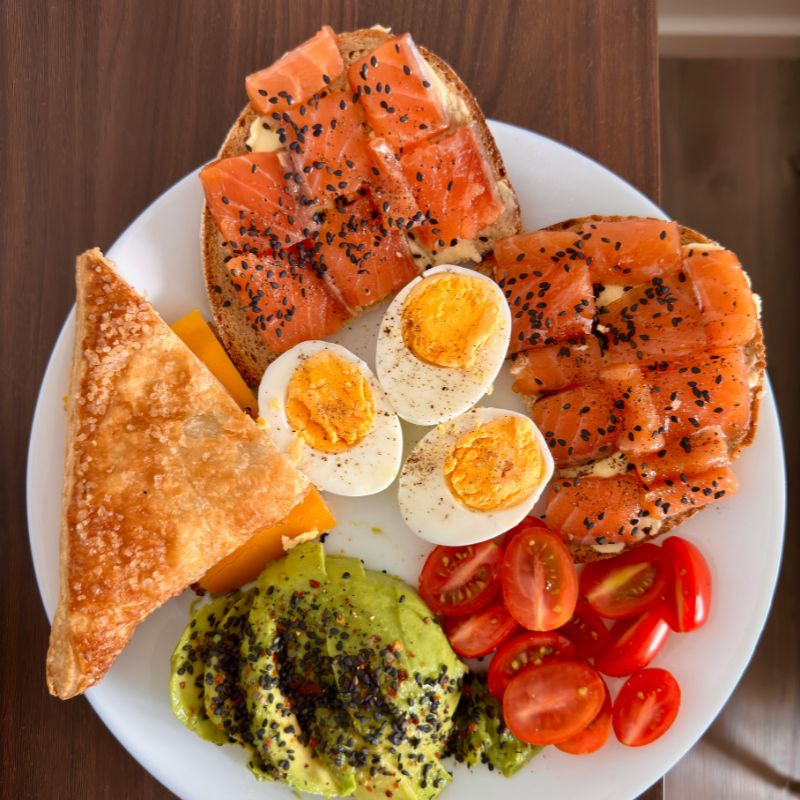
Don’t chase a number while forgetting the rest of your plate. Favor beans, lentils, nuts, seeds, soy, fish, seafood, lower-fat dairy, and lean poultry over processed or high-saturated-fat meats. This gives you protein along with a better overall nutrient profile.
Personal advice is essential if you have kidney or liver disease, diabetes, an eating-disorder history, or unexplained weight loss. Kidney needs are especially different: people with chronic kidney disease may need less protein before dialysis and more during dialysis.
Final Thoughts on This Practical Guide
Deciding how much protein you should take isn’t about choosing the highest number you can tolerate. Your ideal range should reflect your health, body, routine, and goals while leaving room for carbohydrates, healthy fats, fruits, and vegetables.
Use these recommendations as a starting point, then personalize them with a registered dietitian when needed.
Which range feels most realistic for your body and daily life?

Hi I’m Ana. I’m all about trying to live the best life you can. This blog is all about working to become physically healthy, mentally healthy and financially free! There lots of DIY tips, personal finance tips and just general tips on how to live the best life.
Leave a Reply